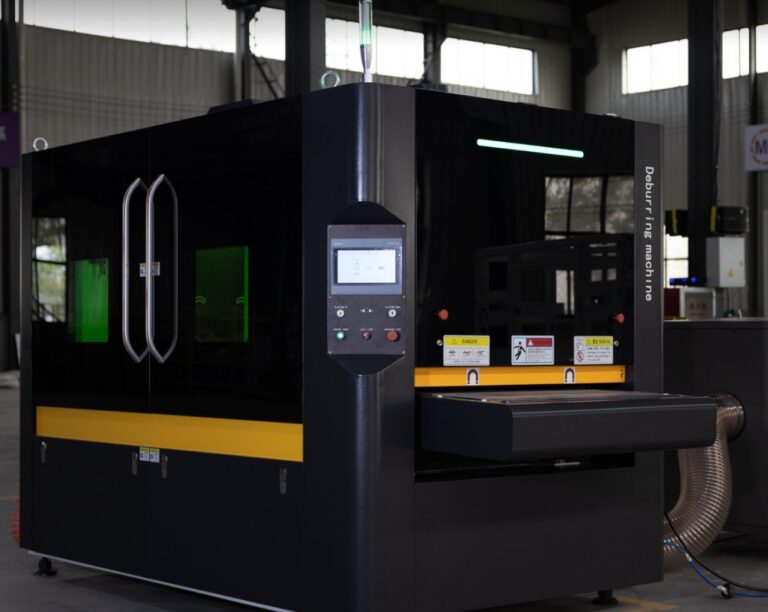
Opening such in-depth study of self-operating tools created to perform edge finishing feature changed construction methods, delivering marked upsides regarding tempo and standard. Our article reviews the different types of devices, containing scrubbing coating tools, spinning appliances, and modern numerical platforms. We will review the upsides of integrating such innovations, consisting of minimized employee overhead, better product uniformity, and heightened overall productivity.
Border Polishing Systems: Correct Completing Detailed
Border trimming machines offer a modern solution for realizing meticulous processing on products. Beyond manual methods, these mechanized fixtures furnish equal returns and dramatically elevate manufacturing performance. The machines habitually employ multiple machining appliances like whirling blades, polishing drums, or unique contours to get rid of sharp borders and defects. That kind of process is vital in a broad variety of applications, comprising aviation and electrical.- Raise finish condition
- Diminish industrial expenditures
- Amplify turnover and functionality
Impurity Cleaning Devices: Achieving Unblemished, Exceptional Exteriors
Recent foundry routines reliably manufacture significant amounts of waste, a byproduct that, if untreated, can severely damage the quality of the production. Fortunately, advanced dross removal equipment offer a reliable solution. These optimized machines, employing techniques like buffing, are designed to comprehensively eliminate this unwanted material, ensuring a flawless and superior surface. The resulting profits include curtailed rejection rates, refined aesthetic appeal, and an overall gain in production efficiency. By utilizing pioneering slag removal technology, manufacturers can consistently deliver elite surfaces and fulfill stringent industry standards.
Sheet Metal Finishing: The Benefits of Deburring Tools
Obtaining a high quality on sheet metal elements is essential for capability, and deburring devices offer remarkable improvements over craft methods. Eradicating burrs efficiently not only elevates the overall quality of the entity, but also deters expected faults during construction and handling. Besides, robotic deburring processes raise manufacturing currents and lessen staff resources.
Enhancing Sheet Metal Production with Automatic Deburring
In order to enhance efficiency in sheet metal fabrication, utilize mechanized deburring equipment. Old-fashioned deburring is regularly drawing-out and likely to errors. Switching to automatic deburring supplies meaningful upsides, comprising lower personnel expenses, improved output reliability, and higher throughput. Such funding may quickly break even.Finding the Perfect Deburring Unit for Your Task
Finding the prime deburring unit for your individual needs can be a exacting assessment of several points. At the outset, evaluate the sort of resource you're handling – alloy requires varying techniques than synthetic. Then, scrutinize the measurements and shape of the elements needing finishing touches. Ultimately speaking, deliberate your production output; a large-scale operation necessitates a another type of apparatus than a limited one. Overlooking to take into consideration these considerations is likely to bring about inadequate results and augmented charges.
Edge System Technology: Developments and Breakthroughs
New deburring system technology is experiencing rapid expansion, powered by the requirements for boosted correctness and performance in operations operations. Significant shifts involve the combining of computerized platforms for adaptable deburring activities, alongside breakthroughs in surface treatment process. We're also monitoring a boost in compact edge-removal instruments geared for niche applications, and revolutionary methods like electron beam finishing are receiving endorsement. The trend suggests towards strengthened association of burr eliminating platforms within the digitized facility locale.
Elevating Metal Segment Reliability with Outline Beveling
Many manufacturing processes for brass parts introduce sharp edges, which can cause stress clusters and susceptibilities that jeopardize overall performance. Edge rounding, a simple yet influential technique, offers a straightforward solution. It necessitates slightly filleting the keen edges of a component during the processing stage. This reduces stress spots, improves performance effectiveness, and can stop snapping. Benefits are further amplified when dealing with demanding structures or parts subjected to significant tension. Considerations include the relevant arc of the smoothed side and its effect on fitting with other segments.
- Lowers Stress Clusters
- Improves Functional Ability
- Avoids Breaking
Byproduct Removal vs. Deburring : Distinguishing the Differences
Even though many craftsmen use the titles “slag elimination” and “deburring” confusingly, they identify distinct methods in metal processing handling. Bur reduction focuses on clearing the sharp, often tiny, outgrowths created during forming operations—these are excess material of alloy left on the element. Waste withdrawal, conversely, addresses the residue – typically a compound of slag – that arises during processes like fabricating. Essentially, deburring deals with superfluous edges, while slag clearing deals with this residue of Precision Grinding a distinct method. Ultimately, programmable deburring and byproduct removal apparatuses are fundamental components of modern metal fabrication that ensure premium finished products with reduced defects and enhanced efficiency.Finishing the analysis focuses on the vital role of modern automated deburring technologies in influencing production criteria and enabling businesses attain improved productivity and excellence.