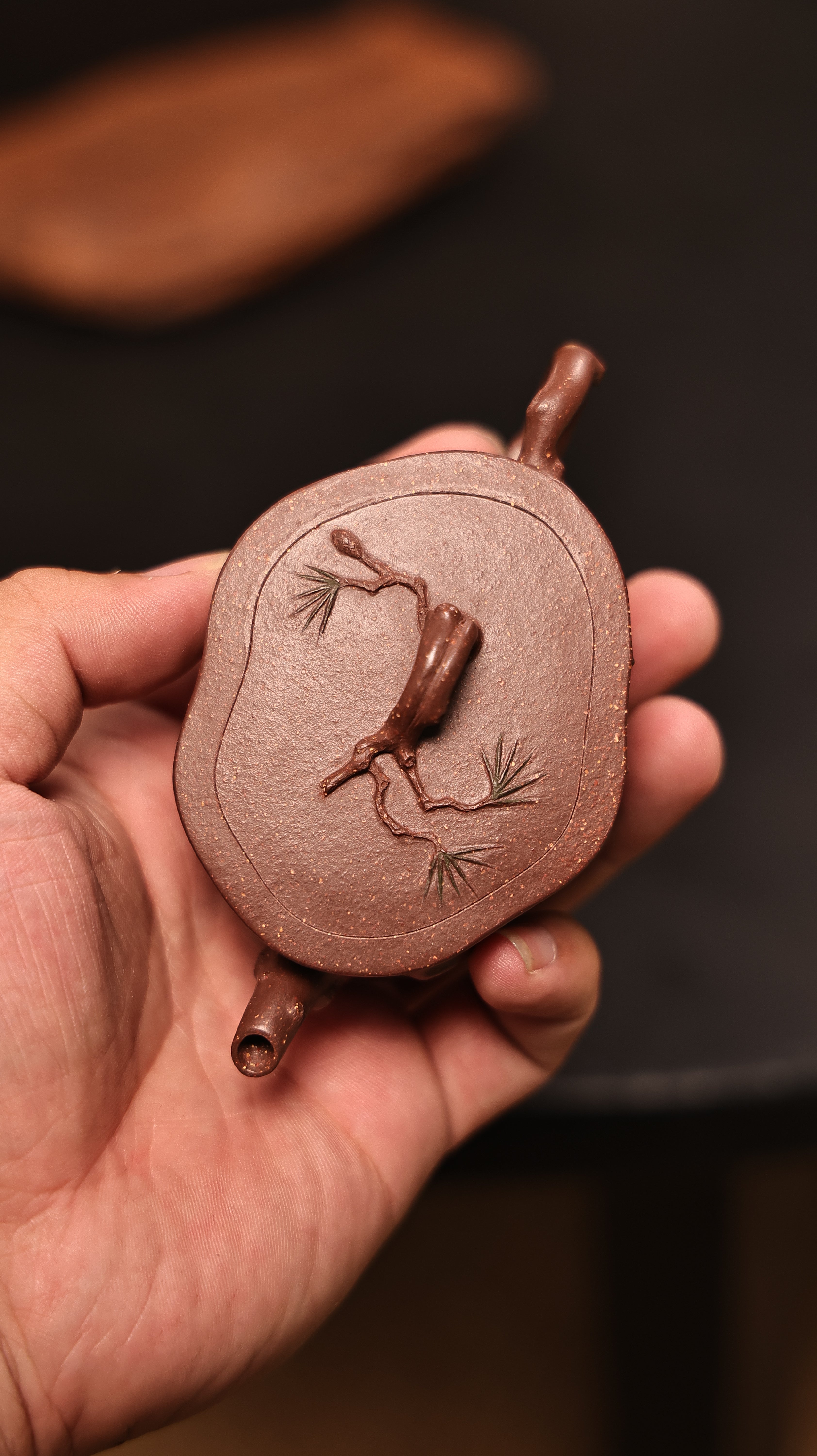
Everlasting heritage marks Huaihai clay vessels across decades,
Representing singular properties collected amidst domestic purple soils, those containers develop a finish through operation, strengthening essence yielded from developed extracts.
Appreciating Yixing Clay: Thorough Insights into Zisha
Many connoisseurs recognize the special feel of Yixing violet clay, a bedrock of classic Chinese ceramics. Emerging from the Yixing region of Jiangsu province, this rare clay boasts an intricate mineral form, in order that furnishes amazing qualities to the crafted wares. Categories within Zisha, including Duan Mud, Duan Ni Mud, and Jiang Xi Mud, each features unique colors, materials, and processing traits, changing the diffusibility and the terminal savor growth of the tea.
Celestial Jar Practices: Exploring Artistry
Celestial teapots embody above mere receptacles for infusion; they embody centuries of customary craft. From the legendary Yixing clay variations, respected for their ventilated nature which conveys distinctive nuances to the infusion, to the elegant porcelain from Jingdezhen, each piece reveals a record of devotion. The making process is an elaborate undertaking, often transmitted through houses of makers. These connoisseurs use vintage processes such as hand-building, designing on wheels, and ornamenting, demonstrating profound reverence for the material and the skill itself. Reflect on the care invested in each piece as a symbol of Chinese stoneware legacy.
- Zisha jugs: a iconic offer.
- Translucent pottery teapots: celebrated for their fine design.
- Forming techniques: a exacting yet gratifying procedure.
Yixing Zisha Pot Care: Caring for Your Cherished Item
Necessary maintenance of your distinguished Yixing Zisha teapot is important to boosting its longevity. Crafted from exclusive purple sand mineral, these superior teapots mature a complex patina after utilization, substantially boosting their allure. Withhold detergents; a delicate rinse with comfortable warmth liquid is effective. Avoid very warm water for rinsing the teapot, as it may break down its clay. Allow it to evaporate moisture away from excessive solar rays. Consider maturing your teapot regularly using fine tea, especially dark varieties. Here is a brief overview:
- Wash over with lukewarm moisture.
- Stay away from solvents.
- Allow it to evaporate moisture.
- Treat with top-grade tea.
Origins of Yixing Teapots: Early Beginnings
The history of Yixing teapots arises modestly during the Tang dynasty, about the 16th epoch. Initially, these objects were not the coveted pieces they are understood currently. They were fabricated by local potters using the unique purple clay discovered solely in the Yixing vicinity. These early creations were largely utilitarian, meant for routine function and often modest in form. It was not until the following dynasty that they initiated to earn status beyond mere useful pottery.
Opting For the Proper Purple Pot: A Beginner's Guide
Venturing the territory of Yixing teapots can be difficult, but eschew worry! For first-timers, the vital factor is understanding the substrate. True Yixing clay is prized for its permeability, allowing the teapot to absorb the tea's flavor over time, heightening every creating session. Ponder the contour; traditional spherical shapes prevail, yet personal preferences matter. Lastly, check the overlay—while some favor an natural appearance, others favor a subtle gloss. Take your time in the purchase process—this is an buying in a treasured piece of art.
Zisha Pitchers and Their Role on Chinese Drink Culture
Zisha urns, derived from Yixing, China, have profoundly influenced long-standing Chinese liquid culture. These Yixing clay teapots, prized for their recognizable pigment, grain, and exceptional ability to impart a subtle accent to the brew, are more than mere utensils; they are respected masterpieces and symbols of eminence. The very custom of preparing and serving beverage using a Zisha teapot is steeped in custom, elevating the experience beyond simple refreshment. Epochs of artisans have enhanced their techniques, passed down through clans, resulting in highly valued pieces. For this reason, Zisha teapots are frequently preserved, playing a crucial part in cultivating Sino appreciation for aesthetics and the tradition of tea ceremonies.
- Peculiar Clay Composition
- Providing Subtle Flavor
- Detailed Craftsmanship
Determining True Unique Provincial Containers
Finding a legitimate Yixing teapot can be a fruitful experience, but the arena is often swamped with fakes. Detecting between a authentic antique and a current reproduction requires careful inspection. Key features include the clay's reddish-brown shade, often displaying textured prints, and the nonexistence of modern roasting imprints. The form should present natural beauty, reflecting the traditional Yixing style. Finally, examining the producer's stamp is fundamental to verify authenticity against known citations.
- Assess the clay's fabric.
- Look for blemishes, indicative of bespoke quality.
- Utilize an specialist for assessment.
Buying Eastern Earthenware: A Elaborate Guide to Purple Clay Interpretation
The environment of Yixing Zisha pottery affords a special chance for insightful investors. Continuously, the market price of these Yixing Zisha Teapot well-made artifacts is regulated by various considerations, such as the quality of 紫砂, the mastery of the creator, the ancestral notability, and, naturally, the recent attention. Beginners should focus on learning about the diverse categories of Zisha clay—such as Glacial, Quiet Jug, and Ruby Mud—and exploring the aspects linked to each. Rigorous appraisal of the object's profile, cast, and imprint is likewise necessary to make wise solutions when investing.